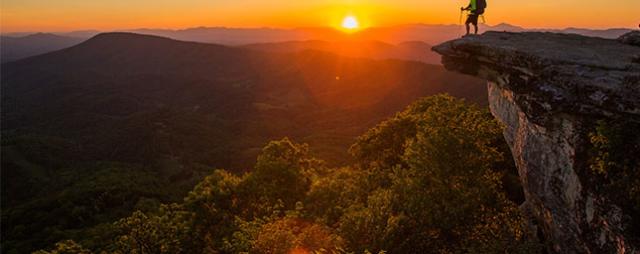
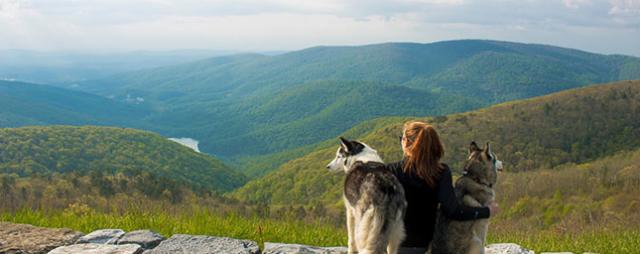
Created in 1969, the iconic "Virginia is For Lovers" tourism slogan has become a beloved saying in the Commonwealth and a heavyweight in marketing. It was even inducted into the Madison Avenue Advertising Walk of Fame in 2009. While it has meant a lot of different things to a lot of different people over the years, one thing has always remained the same — LOVE.
Virginia is for all lovers. During Pride Month and year-round, we welcome and celebrate LGBTQ+ visitors, friends, neighbors, and residents to discover the spectrum of adventure to be found in Virginia. Dive into the history and see how your trip to Virginia can also explore the variety of queer stories in the past and present.
Thomas/ine Hall Portrait by Ren Tolson
Queer History in Colonial Williamsburg
In 2019, Colonial Williamsburg began a project to learn more about queer stories in colonial times. As historians like the Colonial Williamsburg Gender and Sexual Diversity Research Committee dig deeper into Virginia's past, more stories are being shared which center on historical figures who may have identified with the LGBTQ+ community, had they lived in different times.
The committee and other historians have brought to life stories like that of Thomas/ine Hall, a 17th-century intersex Virginian who was known to present as both male and female. Their case made it to a Jamestown court in 1629, which ruled that Thomas/ine had a "dual nature" and should wear male and female clothing simultaneously, as a way to subject them to shame and ridicule.
Keep exploring:
- Read: "Pride and Prejudice: Honoring historic LGBTQIA+ voices" by Ren Tolson, interpreter at the Colonial Williamsburg Foundation
- Watch: EntryPoint: Both Man and Woman: Thomas/ine Hall in Colonial Virginia, a discussion between Encyclopedia Virginia managing editor Patti Miller, Julie Richter of William & Mary, and Ren Tolson of Colonial Williamsburg
Hampton Roads Pride
20th Century Stories
1969 was a landmark year for LGBTQ+ rights in America. On June 28, the Stonewall Uprising took place in the Greenwich Village neighborhood of New York City. Led by two transgender women, Marsha P. Johnson and Sylvia Rivera, the uprising has been used to mark the beginning of the Gay Liberation movement in the United States.
LGBTQ+ communities and businesses around Virginia would begin to appear more in the public eye in the 20th century.
In Hampton Roads
In Virginia’s urban centers, such as downtown Norfolk, queer communities faced similar harrassment by police, but still gathered and carved out spaces for themselves around town. The Continental Lounge and Mickey’s on Brooke Street had become internationally known as a respite for sailors and their friends, and had acquired a largely gay clientele. Later, in 1972, Norfolk’s first local gay newsletter, called Friends, was created and edited by Mickey’s Jerry Halliday and H.T. Kelly, Jr.
Today, Norfolk is home to a vibrant LGBTQ+ scene, including local favorites MJ’s Tavern and dance club The Wave. Explore the history on a self-guided Queer Walking Tour of Norfolk or visit during Hampton Roads Pride Weekend for an all-out celebration of queer communities on the coast, including a boat parade, march, vendors, artists, and more.
Check out more Hampton Roads Pride events all year long.
Keep exploring:
- Read: "LGBT Hampton Roads" by Charles H. Ford and Jeffrey L. Littlejohn
- Read: "Norfolk's Queer History" blog post by Charles H. Ford
- Read: "1981—My Gay American Road Trip: A Slice of Pre-AIDS Culture" by JD Doyle
Downtown Roanoke
Photo Credit: Sam Dean @sdeanphotos
In Virginia's Mountains and Southwest Virginia
Queer life could be quite different in the smaller cities and towns of Southwest Virginia and the Virginia Mountains. Roanoke’s Backstreets and Trade Winds Restaurant were popular regional gay bars. Patrons would walk around to the back of the building, down an alley and several steps down. Attracting a large crowd, this type of social gathering spot was indicative of many home-grown and under-the-radar gay and lesbian bars around the country.
In 1971, less than two years after New York’s Stonewall event, a group of gay men and women founded the Gay Alliance of the Roanoke Valley (now the Roanoke Diversity Center), which was the first Gay Liberation organization of the region.
Today, celebrate love in the Star City at the annual Roanoke Pride festival, which began in 1989. or on the Roanoke LGBTQ History Walking Tour. Since 1978, locals and visitors have loved dancing the night away at The Park Dance Club in downtown Roanoke. You can also schedule a private walking tour of Roanoke with the Southwest Virginia LGBTQ+ History Project.
Further west in Blacksburg, Virginia Tech students had a role in LGBTQ+ history. The university's Gay Student Alliance held its first Gay Awareness Week from January 15-19, 1979. The cornerstone event of the week was Denim Day, where students were called on to wear denim in support of gay rights. A few dozen people bravely participated, enduring verbal and physical assaults from their peers and community members.
Now, the Ex Lapide Alumni Society and the Virginia Tech community honor Denim Day and those brave individuals by wearing denim and welcoming back queer alumni each year during VT's Pride Week.
the Virginia Tech’s Ex Lapide Alumni Society welcome back to campus Queer alumni for “Denim Day,” commemorating the groundbreaking 1979 LGBTQ+ student-led day of support on campus, which at the time, was highly contested.
Keep exploring:
- Listen: Over 50 oral histories from community members, recorded by the Southwest Virginia LGBTQ+ History Project from 2015-2024.
- Listen: Eight episodes of the Southwest Virginia LGBTQ+ History Project podcast
- See: Timeline of LGBTQ+ History at Virginia Tech
Freddie's Beach Bar
Photo Credit: Hannah Armstrong @hannahelizarmstrong
In Northern Virginia
Cities and counties in Northern Virginia were home to hubs of LGBTQ+ life and resistance in the 20th century. Following the Guild Guide (similar to the Negro Motorist Greenbook, but for LGBTQ+ travelers), gay customers could explore welcoming businesses.
In 1981, the Arlington Gay & Lesbian Alliance (now EQUALITY NoVa) was formed to be a hub for LGBTQ+ communities in Northern Virginia. In the following decade, it would make major strides in visibility and civic organizing, capped off in 1992 with a legal victory that said Arlington County could provide enforceable human rights protections for gay men and lesbians. The group continues its activities to this day.
In 2001, a now iconic hotspot opened in Crystal City. Freddie's Beach Bar is known for its amazing brunch, karaoke, and drag shows. Proprietor Freddie Lutz also opened Federico Ristorante Italiano on the same block, a casual Italian spot with standout desserts and a welcoming atmosphere.
Keep exploring:
- Read: "Out and About in Northern Virginia" introductory essay on the Guild Guide
- Watch: Archive footage and videos compiled by Out and About in Northern Virginia
- Visit: "Out & About: The Walk-In Closet" exhibit at the Fredericksburg Area Museum, open through July 2026
VA Pridefest
Photo Credit: Joey Wharton @joey_wharton
In Central Virginia
Virginia's capital city had an underground gay culture and community that was hidden in plain sight for much of he 20th century. From the 1940s to the 1970s, the scene revolved around the area between First and Foushee Streets, known as "The Block." Bars on the Block and around the city were frequently targeted by police for raids.
Richmond is a city of particular interest for the history of lesbian bars. Lulu's was a Black lesbian bar in Church Hill, well hidden by those who were not in-the-know. In 1979, Babe's of Carytown opened, offering lesbians and other queer community members a place to dance, socialize, and play beach volleyball. It is now the last remaining lesbian bar in Virginia, and one of only a few dozen left in the country.
Formed in 1993, the Richmond Triangle Players is a nonprofit theater company which has become a leading organization for queer theater on the East Coast.
Visit Richmond during VA Pride's Endless Summer of Pride, which extends the Pride festivities all throughout the summer leading up to Pridefest in September. Don't miss Black Pride, an annual event organized by local group Us Giving Richmond Connections.
For more Richmond travel tips, check out OutRVA for events, restaurant recommendations, and more.
Keep exploring:
- Discover: A map of Richmond's Queer History, compiled by Rich Griset and Josh Mallow for Style Weekly
- Read: "Lesbian and Gay Richmond" by Beth Marschak and Alex Lorch
- Tour: Go on a walking tour of the Carytown neighborhood and learn about LGBTQ+ history around Richmond with the Valentine.
Museum of the Shenandoah Valley
Photo Credit: Sam Dean @sdeanphotos
In the Shenandoah Valley
One standout business in Winchester's LGBTQ+ and Black History was Ruth's Tea Room. Opened in 1925 by a Black woman named Ruth Jackson, the restaurant grew to be a welcoming space for Black travelers and people from all walks of life, including queer people. It remained a family business until it closed in 2005.
Winchester native Julian Wood Glass, Jr., along with partner R. Lee Taylor, were collecting art and antiques while renovating Glass’s family estate, the Glen Burnie House, in 1952. Decades later, the home would open as the Museum of the Shenandoah Valley in 2005. The museum shares the collections and culture behind this extraordinary story, including a one-of-a-kind, fascinating collection of furnished miniature houses and rooms created by R. Lee Taylor.
Winchester is also known as the birthplace of pioneering country singer Patsy Cline. While Cline's public relationships were all with men, she has become a queer icon in her own right, and you'll likely hear the timeless songs as you explore The Patsy Cline Historic House.
Keep exploring:
- Explore: Timeline of LGBTQ+ History in the Shenandoah Valley
- Visit: Staunton Pride, held annually in October
VA Pridefest
Photo Credit: Joey Wharton @joey_wharton
Celebrate Pride in Virginia
There are a multitude of Pride festivals and events all over Virginia, from events like Piedmont Pride in Upperville and Persist in Pride in Pulaski to main street parades in Floyd, Harrisonburg, Staunton, Bristol, and Bedford.
The largest annual Pride festivals are in Norfolk and Richmond each year. Roanoke and Charlottesville also host big events. These events work to bring together queer locals and allies while also welcoming visitors, friends, and family.
Find more Pride events to celebrate around Virginia and plan your Virginia getaway with our guide to self-designated LGBTQ+-friendly businesses, restaurants, and places to stay.
For more history, visit LGBTQ Heritage in Virginia from the Virginia Department of Historic Resources and the LGBTQ+ History page curated by the Virginia Museum of History & Culture.